Work / 03 · Riksteatern
A new Scenkonstportalen that works with the systems around it
- Client
- Riksteatern (new Scenkonstportalen, within a wider engagement managing Riksteatern's internal systems)
- My role
- UX/UI designer & front-end developer (consultant)
- Period
- 2022–present, as needed
- Standards
- WCAG (requirement)
In short
Problem
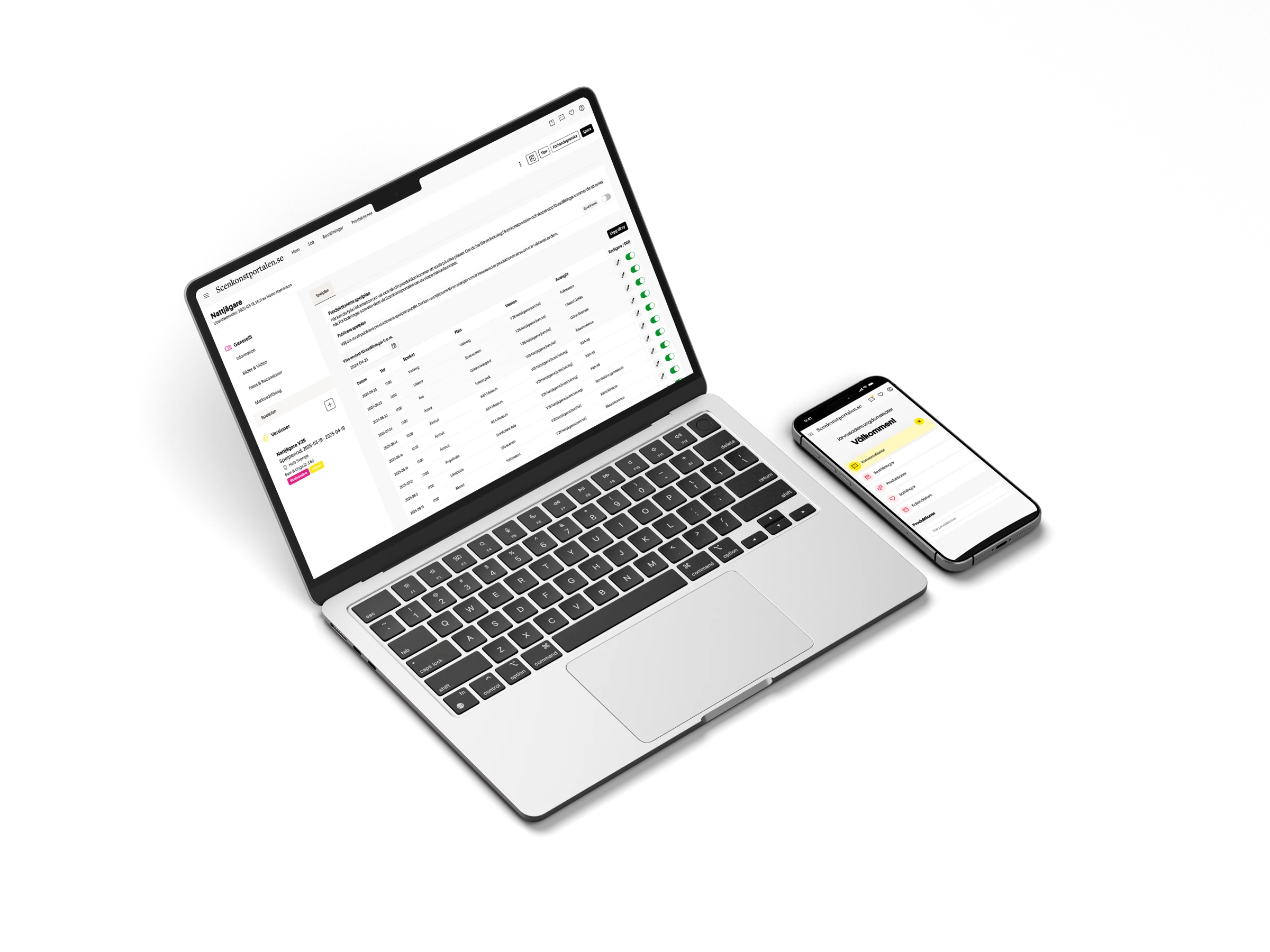
Scenkonstportalen is where producers, mostly smaller ones, and organisers of performing arts in Sweden find each other. The old portal was hard to use. A new one had to be built, and it had to work with the internal systems Riksteatern uses to plan, sell and tour productions.
My role
UX/UI designer and front-end developer in the consultant team that manages most of Riksteatern’s internal systems. Most of my work went into the new Scenkonstportalen: workshops, design in Figma and front-end development.
Result
The new Scenkonstportalen launched and our team has maintained it since. It has over 2,700 producers and 4,400 organisers. In the wider system landscape, planning, sales and touring now move between systems instead of depending on a few people.
The problem
A production is planned in one system, booked through another and toured with a third.
Part of Riksteatern’s mission is to promote performing arts across Sweden. Scenkonstportalen is one way of doing that. Producers present their productions, and organisers around the country find and book them. Riksteatern has its own channels to its local Riksteater associations, so the portal is mainly for everyone else, often smaller producers.
The old portal had a lot of problems for both groups. It also doesn’t stand on its own. Behind it are Riksteatern’s internal tools for productions and tours, planning and sales, working hours and contracts, which our team also manages. A production is planned in one system, booked through another and toured with a third. For the people doing the work, it’s one process.
My role
- Workshops with the different groups using the portal: producers, organisers and Riksteatern’s staff.
- Design of the new Scenkonstportalen in Figma, from interactive prototypes tested with stakeholders to finished interfaces.
- Front-end in HTML and CSS in Blazor, against a .NET back-end.
- The wider system landscape, where I design new features so they fit with the systems around them.
- Accessibility, which was a requirement rather than the main focus. It’s always part of how I work, so everything I delivered went through my accessibility lens.
Key decisions
Five decisions that shaped the portal
Relevant to you
Decision 1: Starting with workshops for each group
A meeting place has more than one side. Producers want their productions to be found, organisers want to find something that fits their stage, audience and budget, and Riksteatern needs to be able to run it all. We held workshops with each group before designing anything, so the new portal was based on how they work and not on how the old portal happened to be built.
Relevant to you
Decision 2: Asking what people actually need
This example comes from the internal systems. The client asked for an overview of a group’s production calendar. When we looked into how people actually worked, it turned out that what they needed was simpler: a way for each person in a production to see their own schedule. Had we built the overview as requested, I doubt many would have used it.
For me, this is where UX contributes the most. The user’s perspective starts long before there is an interface to design, and a lot of my work is about listening, asking questions and sometimes suggesting something other than what was asked for.
Relevant to you
Decision 3: Designing across system boundaries
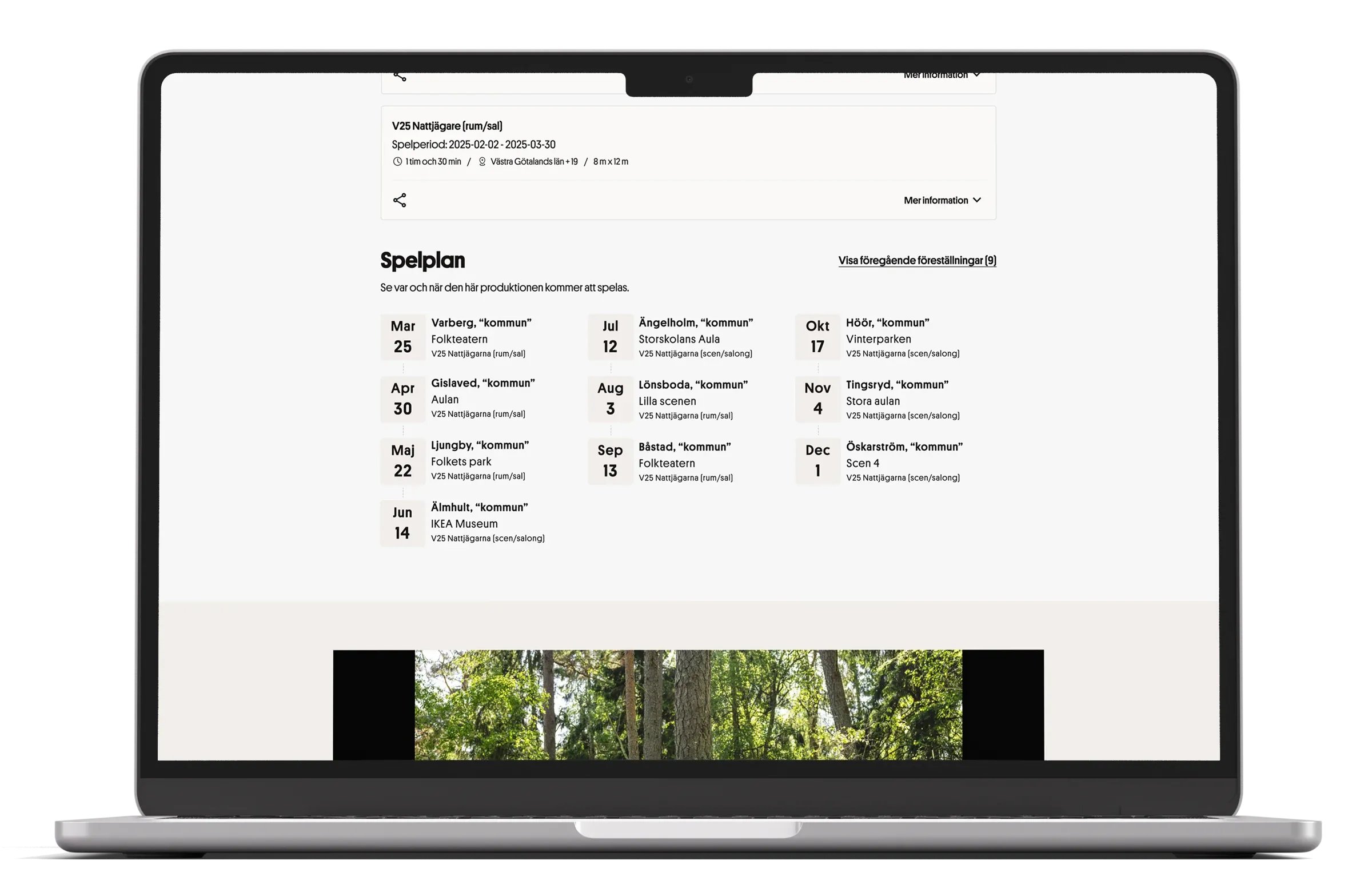
Productions, planning, sales, working hours and contracts sit in separate systems. When a production is ready to sell, it now syncs from the planning tool to where organisers can book it. When bookings are confirmed, tour planning picks them up. When I design a feature, I look at what happens just before and after it in the other systems, so the move from one system to the next doesn’t feel like starting over.
Relevant to you
Decision 4: Prototyping ahead of development
In a scrum team, design that arrives at the same time as development comes too late. I try to stay a sprint or so ahead with sketches and prototypes, and go through the flows with the product owner and stakeholders before they’re specified. By the time something reaches the developers, it has already been tested.
Relevant to you
Decision 5: Building the front-end myself
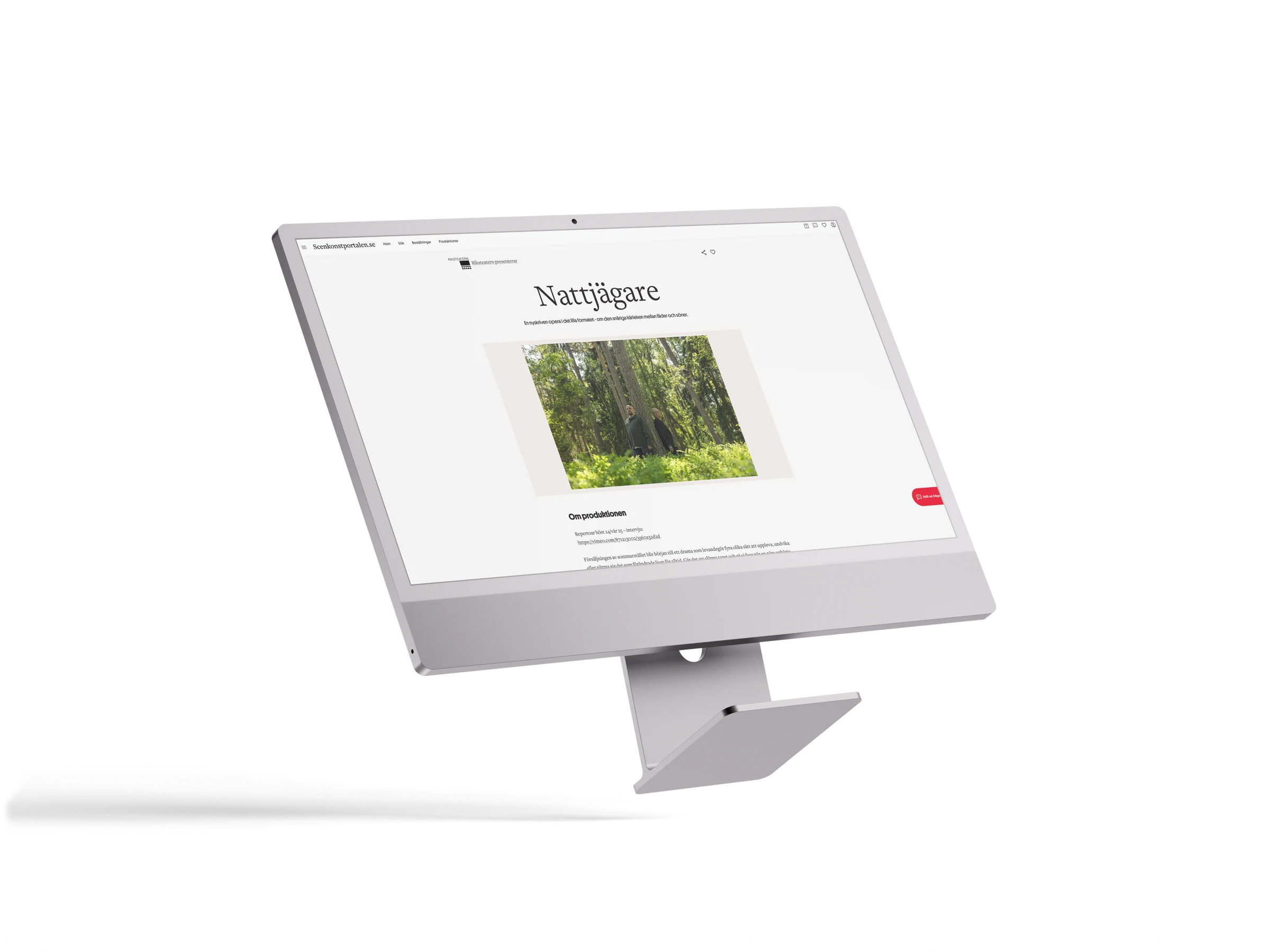
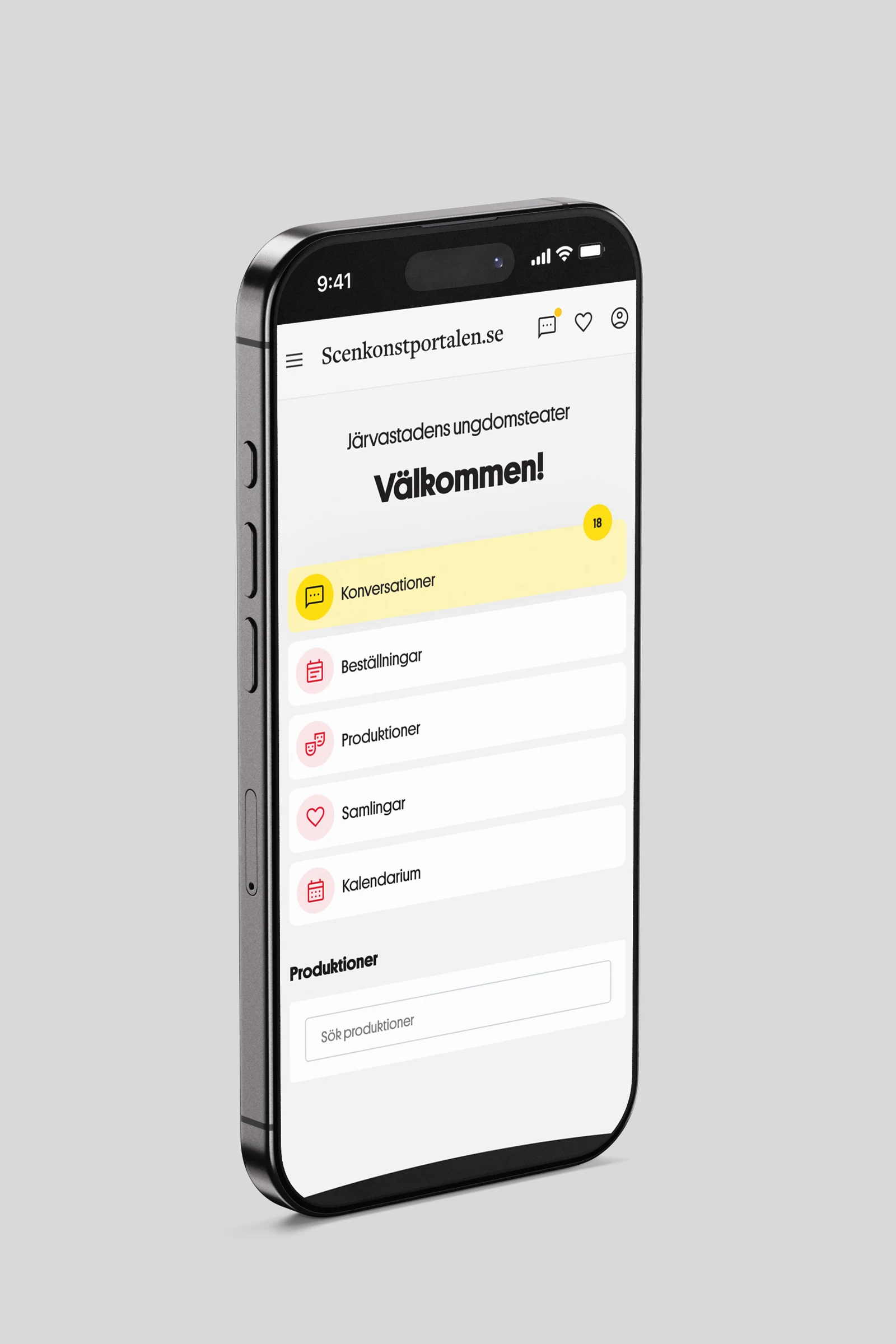
For Scenkonstportalen, I built the front-end in HTML and CSS in Blazor while the developers built the .NET back-end. The graphic profile came from an agency. Our job was to make it work in a real product, with real data, large tables and mobile views. I’ve done the same at Authway, and it’s a kind of work I enjoy.
Results
What stuck
- The new Scenkonstportalen launched, replacing the old portal, and our team has maintained it since. Over 2,700 producers and 4,400 organisers use it.
- A digital process that depends less on individuals. Planning, sales, touring, working hours and contracts used to rely on manual steps and what certain people knew. Now the information moves between systems. We haven’t measured it in numbers, but the process is faster and no longer depends on one person.
- Design based on workshops with every group that uses the portal.
- Accessibility was a requirement, though not the main focus of the project.
Images
Visual identity: a web agency that prefers not to be named
- #E01A76
- #141010
- #EDE7E3
- #F5F2F0